
"Mutualised DokitaEyes: digitising care for policyholders in Zio and Greater Lomé
- Posted on 24/08/2023 17:48
- Film
- By raymonddzakpata@sante-education.tg
.jpeg
"santé éducation")
Extract from the article: L'accès aux services de santé est un défi majeur au Togo, en particulier dans les zones rurales et éloignées où les infrastructures médicales sont limitées. Des inégalités sociales et vulnérabilités systémiques et organisationnelles subsistent encore
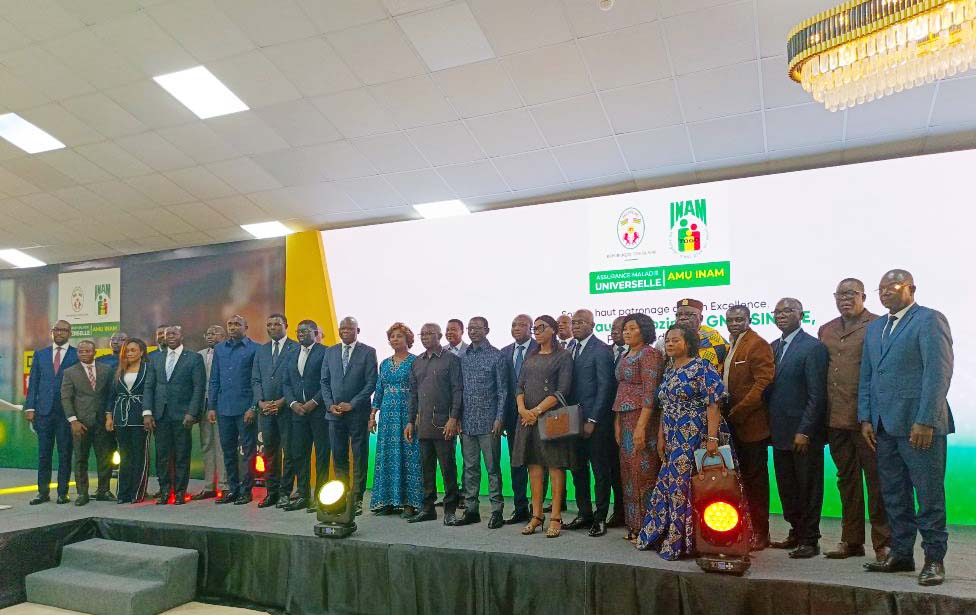
Access to healthcare services is a major challenge in Togo, particularly in rural and remote areas where medical infrastructure is limited. Social inequalities and systemic and organisational vulnerabilities still persist. The 'Innovation for the Health of People in Vulnerable Situations in Africa' (ISPV) project aims to rectify these situations. Supported by the association Coursier d'hôpital international (CH-I), the start-up DokitaEyes and the Union des mutuelles de santé de l'archidiocèse de Lomé (UMUSAL), the project was presented at a press conference in Lomé on Wednesday 23 August. The 3 organisations coordinating the project are offering people a package of services known as "DokitaEyes mutualisé".
A bottleneck in Togo's health system is the suffering of patients, the low level of support for mutual health insurance among the population and the absence of any disease prevention measures among mutual health insurance members. This vulnerability is a breach of the universal coverage promoted by the Togolese government. In response to these challenges, the association Le coursier d'Hôpital International (CH-I), the start-up DokitaEyes and the Union des Mutuelles de Santé (UMUSAL) have joined forces to develop a service called "Mutualised DokitaEyes", supported by the Innovation for the Health of Vulnerable People in Africa ISPV-Africa project. The project, scheduled to run for a pilot period of 12 months, embodies the spirit of solidarity and cooperation to overcome barriers to access to healthcare services.
The offer consists of direct cover of 75% of health costs by UMUSAL, reception and support by agents based in the health centres, home visits for medical monitoring, regular taking of vital parameters and health advice for prevention; a medical history transmitted and reimbursement of the costs of care of mutualists to care providers within a short period of time.
The "Mutual DokitaEyes" initiative
"Mutualised DokitaEyes has three main components. "The first is dedicated to the medical facilitators who will be in the health centres to welcome policyholders and make it easier for them to receive treatment. The second component: We have medical facilitators who will digitise care for policyholders so that partner insurance companies can quickly reimburse providers for services. We want to achieve a 72-hour turnaround time for reimbursements for health services. The third component is the fact that people criticise insurance companies, saying that we pay money, we don't get sick and so we make contributions and we don't get the same value of service back. The project solves this vulnerability by offering home visits to mutualists to help them with prevention", explained Agbétiafa Koffivi, Executive Director of CHI-Togo.
Towards a healthier future
The 'shared DokitaEyes' project is an example of how technology and collaboration can be put to work for public health. By enabling easier and more affordable access to medical services, it brings a glimmer of hope to people who have long been excluded from quality healthcare.
Launched on 03 July, the pilot phase of this project covers low-income populations in the health districts of the Zio prefecture and Greater Lomé for a period of 12 months. Eventually, 5,000 people will be covered in Zio and 10,000 in Greater Lomé.
Raymond DZAKPATA