
Honey and diabetes: advice and recommendations
- Posted on 15/11/2023 13:22
- Film
- By abelozih@sante-education.tg
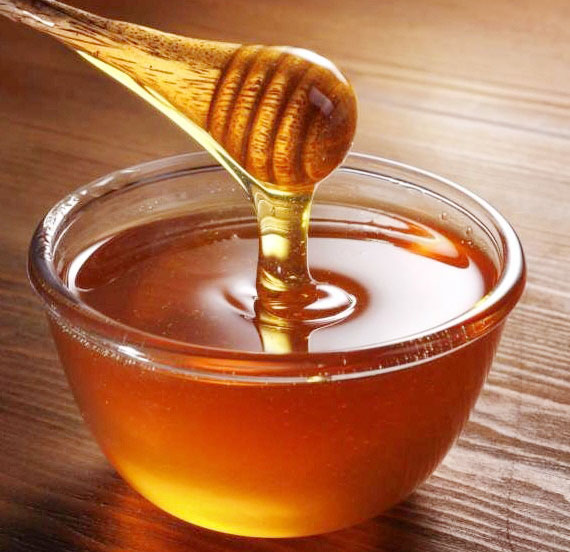
Extract from the article: Honey is a more or less liquid sweet substance produced by bees using flower nectar. It crystallises or remains liquid depending on its fructose and glucose content. The higher the fructose content, the more liquid the honey. Honey has antibacterial
Honey
is a more or less liquid sweet substance produced by bees using flower nectar.
It crystallises or remains liquid depending on its fructose and glucose
content. The higher the fructose content, the more liquid the honey. Honey has
antibacterial and anti-inflammatory properties, as well as strong healing
powers.
Honey
contains over 80% carbohydrates, i.e. sugars. It is composed mainly of two
simple sugars: fructose and glucose. Various scientific studies have shown that
honey has three important health benefits.
« First
and foremost, honey is a good source of antioxidants, which play a role in
combating free radicals, toxic substances that play a part in the development
of cardiovascular disease and certain types of cancer. The darker the colour of
the honey, the more flavonoids, and therefore antioxidants, it will
contain.Secondly, honey has antibacterial and anti-inflammatory properties, and
above all strong healing powers.In equal quantities, honey has a higher
sweetening power than many other sweeteners, such as white sugar.As honey has a
higher sweetening power, it will be consumed in smaller quantities »,
explains Mathieu Tobossi, Specialist in Food Hygiene and Quality.
Should
you eat sweet foods if you have diabetes?
There
are 2 main types of sugar, known as carbohydrates in nutrition.The first family
of carbohydrates are the simple sugars or sucrose, found in white sugar. This
is the sugar found in honey, but also the sugar used to make sweets or to add
to coffee. The second family is made up of complex sugars or starch, found in
bread, cereals including fonio, sorghum, millet, rice, manioc, potatoes and
yams.
According
to Mathieu Tobossi, « It is impossible for diabetics never to consume
sugars.However, you need to choose your sugars carefully, giving priority to
complex sugars, which play a central role as our body's main source of
energy.It is recommended that diabetic patients consume 250 to 500g of complex
carbohydrates a day from cereals such as millet, fonio, rice or roots such as
manioc or tubers such as yams ».
What about the consumption of simple sugars,
and therefore honey?
People
with diabetes should keep their intake of foods rich in simple sugars such as
white sugar, sweets and honey to a minimum. The current recommendation is to
consume a maximum of 50g a day, which is equivalent to approximately 10
teaspoons or 3.5 tablespoons. This is an important recommendation, as these
foods have the ability to raise blood sugar levels very quickly.
However,
when it comes to choosing which 50g of simple sugars to consume, it's better to
eat honey rather than table sugar of any colour or sweet confectionery.Honey: « unlike
white sugar, honey contains glucose and fructose, which gives it a lower
glycaemic index than white sugar, and unlike sweet confectionery, honey
contains no fat, which is very important in cases of diabetes », explains
Mathieu Tobossi.We need to replace simple industrialised sugars with honey,
while remaining very reasonable about the amount we consume.
When
it comes to choosing honeys, we recommend those from the central region,
particularly from the DOOLE, DEPOND-MON and HASSANA GAFOLE beekeeping
cooperatives. The honey from these three co-operatives has been analysed at the
University of Lomé's forestry research laboratory and is considered to be
fresh, genuine and natural, with no chemical inputs.These three cooperatives
are the winners of the 2023 competition for the best honey in the central
region, and their honeys are used for therapeutic purposes, making them the
ideal sugar substitute for diabetics.
William
O.
To contact these beekeeping cooperatives, contact:
SCOOPS DOOLE: + 228 90 34 44 67
SCOOPS DEPOND-MON: +228 91 75 15 54
SCOOPS HASSANA GAFOLE: +228 92 69 30
08