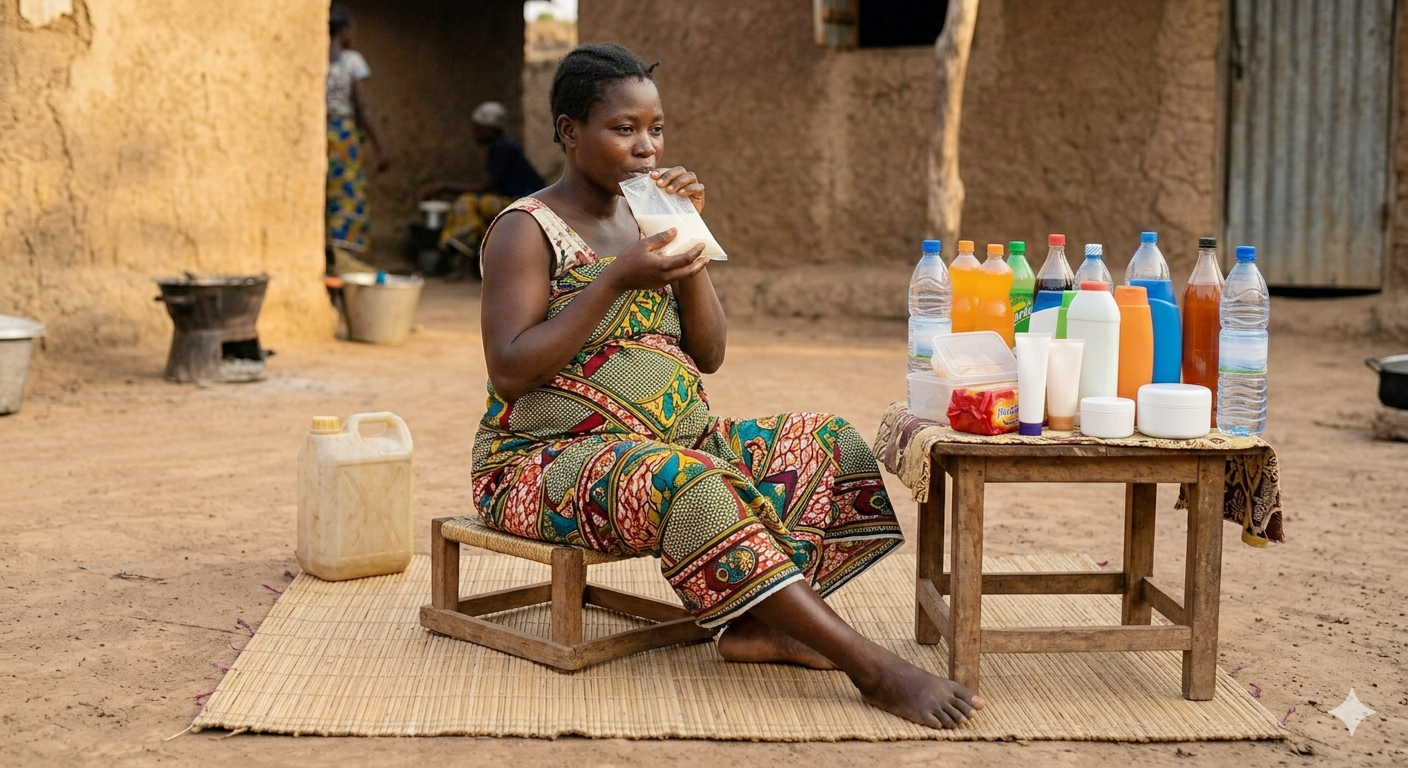

Non-drinking water: public health risks
- Posted on 19/12/2023 15:17
- Film
- By abelozih@sante-education.tg

Extract from the article: Togo is experiencing rapid urbanisation and an uncontrolled population explosion. This demographic explosion is leading to a high demand for drinking water. In recent years, there has been a proliferation of packaged water, commonly known as "pure wa
Togo
is experiencing rapid urbanisation and an uncontrolled population explosion.
This demographic explosion is leading to a high demand for drinking water. In
recent years, there has been a proliferation of packaged water, commonly known
as "pure water". Dr Justine Sanni of the Laboratoire de Microbiologie
des Aliments, de l'eau et produits divers at the Institut National d'Hygiène
(INH) points out that the sachet water production sector is subject to
regulation, but the fact that most producers operate underground means that
production units cannot be regularly monitored by the relevant government
departments to ensure compliance with production standards.
Water
is a vital element for human beings. People can go several days without eating,
but they cannot go more than three days without drinking water. No living thing
on earth can survive without it. So we need to drink clean water. But how do
you recognise good quality water?
Recognising
good quality water
To be safe to drink, water must be clear and limpid, with no colour, taste or odour. « Water must be free of all bacteriological contaminants, harmful chemicals and any other undesirable substances, which can only be detected by laboratory analysis », said Dr Justine Sanni of the Laboratoire de Microbiologie des Aliments, de l'eau et produits divers of the Institut National d'Hygiène (INH). Water can only be declared to be of good quality if it has been analysed in a laboratory.
Consequences
of drinking poor-quality bottled water
Drinking
unsafe water has serious consequences for human life.Access to drinking water
for all is therefore a major political, economic and social issue. A number of risks linked to poor hygiene can
be identified, from production to marketing, which do not always guarantee the
quality of drinking water. « Bacterial infections: untreated water can
contain pathogenic germs such as Escherichia Coli, Salmonella, faecal coliforms
and others that can cause severe gastrointestinal infections. Contaminated water can be the source of
numerous diseases such as diarrhoea, dysentery, cholera, schistosomiasis
(bilharzia) and typhoid.What's more, once the water has been consumed, there is
the problem of managing the packaging. Thrown away after consumption, the
packaging is scattered almost everywhere by the wind and run-off water, making
the streets unclean », explains Dr Justine Sanni.
What
procedures can a company undertake to ensure water quality?
The
indicators used to assess the conditions under which sachet drinking water is
produced include the source of the water supply, the packaging equipment, the
packaging process and the storage of the finished product.The hygiene of the
production site, handling conditions and the maintenance of water storage
equipment are also indicators for assessment.
« In
Togo, the production and marketing of drinking water must comply with a set of
regulatory specifications. Any company wishing to establish itself as a
producer of water, whether in sachets or bottles, must provide an economic
operator's card, an environmental compliance certificate issued by the Ministry
of the Environment, a water abstraction permit issued by the Ministry of Water,
a technical data sheet on installations and staff, the location of the site,
the results of analyses, and the health certificate issued by the Ministry of
Health », emphasised the specialist.
Role
of the Institut National d'Hygiène (INH) in the drinking water production chain
In
its capacity as a national public health laboratory, the INH is responsible for
: epidemiological research leading to the prevention and epidemiological
surveillance of communicable diseases, alone or with the collaboration of other
national or foreign institutions, specialised analyses of clinical biology,
bacteriology, parasitology, biochemistry, haematology and serology, quality
control of water, foodstuffs and the environment, training of national
laboratory staff and trainees from training institutes and schools,
immunisation, issuing and approval of vaccination certificates required for
international travel.
Through
its missions, the INH is involved in the fight against epidemic diseases, while
helping to guarantee the hygienic and sanitary quality of food and water in
order to protect consumers. It is in this context that the INH supports water
producers in the microbiological and physico-chemical analysis of water, food
and various products. This raison
d'être is expressed on a daily basis through our commitments to our customers.
Advice
for the general public and water producers
Dr
Justine Sanni recommends that sachet water producers and distributors should
comply with the health regulations laid down by the competent authority. They
must regularly analyse their water to ensure the quality of their production
before putting it on the market. « Financial
gain must not take precedence over consumer health. The public must demand
quality from producers and not be satisfied with the cheapest water on the
market », she urged consumers.
The
INH, with its internationally recognised quality accreditations, is an
opportunity for farmers, exporters and importers to be sure of the quality of
their product. We are available to support producers in ensuring the quality of
their products. Our laboratories are
located in Lomé and Kara and are open every working day, and since 07 October
2023 on public holidays and Saturdays.
Raymond
DZAKPATA